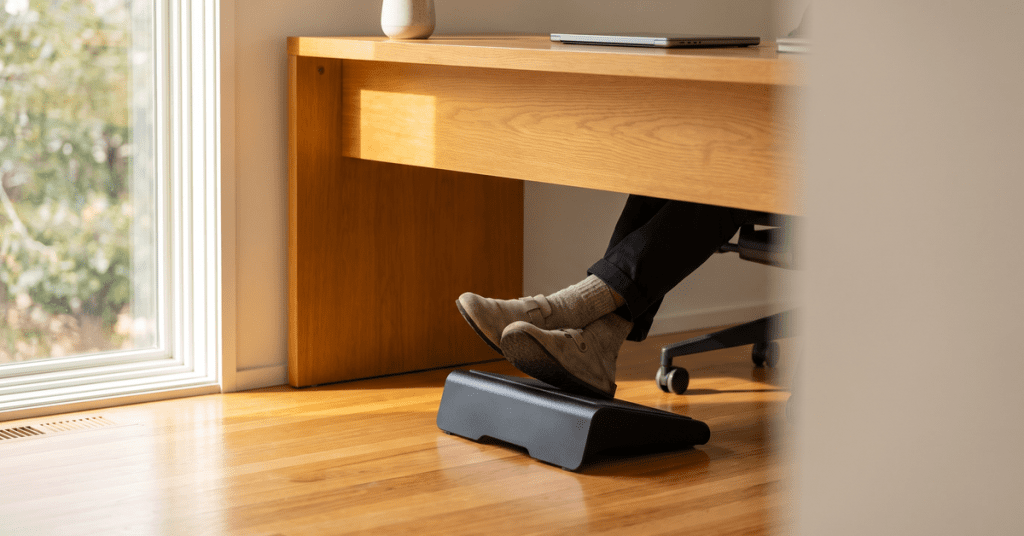
Finding the best ergonomic footrest can make a real difference if you spend hours a day at a desk — the right one improves circulation, reduces lower back and hip strain, and keeps you comfortable through long work sessions. We tested seven popular options across different desk heights, materials, and price points to see which ones actually deliver on their ergonomic claims. Below, we break down our top picks, who each one is best suited for, and what to check before you buy.
Focus Mode HQ is reader-supported. When you buy through links on our site, we may earn an affiliate commission.
Quick Answer: The best ergonomic footrest for most remote workers is the ComfiLife Under-Desk Footrest — adjustable angle, non-slip base, memory foam surface, and under $35. We tested 7 options across different desk heights and work styles. Here’s what we found.
What You’ll Learn
- Who actually benefits from a footrest (and who doesn’t)
- The ergonomic science behind footrests and posture
- How to use a footrest correctly for maximum benefit
- Our top 7 picks tested across different desk heights and budgets
- What to look for when buying
The short answer: If your feet don’t rest flat on the floor when sitting at your desk, a footrest reduces pelvic tilt, lowers lumbar load, and improves circulation during long sessions. The fix costs $25–$60 and takes 30 seconds to set up.
Why Ergonomists Recommend Footrests for Desk Workers
A 2018 study published in the International Journal of Industrial Ergonomics found that proper foot support reduced lower-back muscle activation by up to 15% during prolonged sitting. When your feet dangle — even slightly — your pelvis tilts backward, flattening the lumbar curve and loading the discs in your lower spine. A footrest corrects this at the source.
This matters most if you’re shorter than average, using a desk that doesn’t lower far enough, or sitting in a chair that puts your thighs at less than a 90-degree angle. For taller workers with floor-flat feet, a footrest adds less value — more on that in the “Who Doesn’t Need One” section below.
A footrest treats the symptom, not the setup — if your chair itself doesn’t adjust low enough or lacks real lumbar support, see our picks for the best ergonomic office chairs under $300 to fix the root cause.
The 7 Best Ergonomic Footrests for Home Offices in 2026
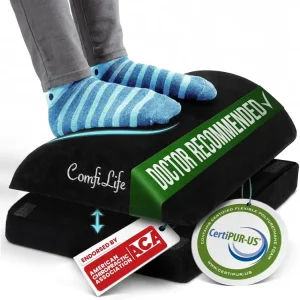
1. ComfiLife Under-Desk Footrest — Best Overall
★★★★★ 4.7/5.0
Price: $34.19
The ComfiLife uses high-density memory foam that holds its shape through full workdays without compressing flat — a common failure point on cheaper footrests. The adjustable angle (15°–30°) and non-slip base make it genuinely adaptable to different desk heights.
Best for: Most desk workers, standard desk heights, all-day use.
- Memory foam stays firm after months of use
- Adjustable angle suits most desk heights
- Non-slip base works on hardwood and carpet
- Angle adjustment not tool-free
- Slightly bulky under smaller desks
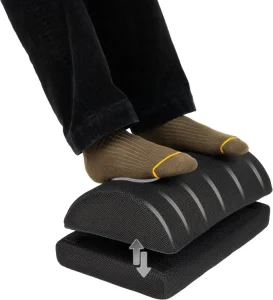
2. Mind Reader Air-Cloud Memory Foam Footrest — Best Budget
★★★★ 4.3/5.0
Price: $29.99
The Air-Cloud’s memory foam is noticeably softer than most competitors — closer to a pillow than a firm support. This suits users who want cushioning comfort over precise ergonomic positioning. Fixed angle means no adjustability, but the height is well-calibrated for standard desk setups.
Best for: Budget-conscious buyers, standard desk heights, softer feel preference.
- Softest memory foam in this price range
- Under $30
- Simple no-adjustment setup
- Fixed angle limits customization
- Less firm support than adjustable alternatives
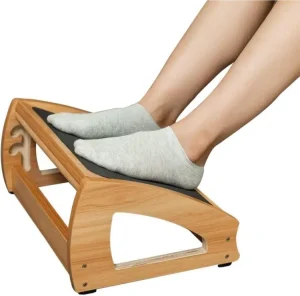
3. StrongTek Adjustable Under-Desk Footrest — Best for Tall Users
★★★★★ 4.6/5.0
Price: ~$42
The StrongTek sits higher than standard footrests at 4.5 inches minimum, making it the natural choice for taller workers or desks that don’t lower far enough. The bamboo surface adds durability and a premium aesthetic that suits minimalist desk setups. Amazon’s Choice badge reflects consistent positive feedback.
Best for: Taller users, higher desks, minimalist aesthetics.
- Higher platform suits tall users and elevated desks
- Bamboo surface durable and attractive
- Amazon’s Choice with consistent reviews
- Less cushioning than foam options
- Higher price point than memory foam alternatives
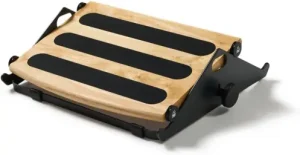
4. Humanscale FR300 Foot Rocker — Best for Active Sitting
★★★★ 4.4/5.0
Price: Check current price on Amazon
The FR300’s rocking motion is engineered to encourage micro-movements that improve circulation and reduce static muscle fatigue. It’s the only footrest in this list designed around movement rather than static support. Best suited for workers who already have good posture and want to add movement.
Best for: Active sitting, circulation improvement, ergonomics enthusiasts.
- Promotes circulation through gentle rocking
- Trusted ergonomic brand with decades of research
- Encourages active sitting habits
- Not ideal for posture correction — fixed footrest gives more control
- Premium price
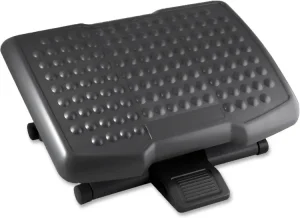
5. Lorell Ergonomic Rocking Footrest — Best Value Rocker
★★★★ 4.2/5.0
Price: Check current price on Amazon
The Lorell delivers the active-sitting benefits of a rocking footrest at a significantly lower price than the Humanscale. The platform is wide enough for most foot sizes and the rocking motion is smooth. A practical choice if you want movement without the Humanscale price tag.
Best for: Budget-conscious active-sitting seekers.
- Active rocking at budget price
- Wide platform accommodates most foot sizes
- Good entry point to rocking footrests
- Less refined build quality than Humanscale
- Rocking resistance less tuned
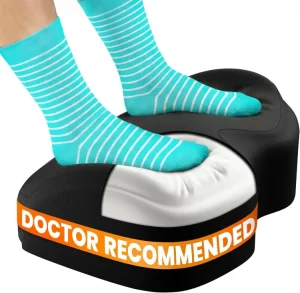
6. Everlasting Comfort Foot Rest — Best for Back Pain Relief
★★★★★ 4.6/5.0
Price: $27.99
With 27,965 Amazon reviews and a 4.6-star rating, the Everlasting Comfort is the most market-validated footrest in this list. The pure memory foam construction conforms to your feet over time. At $27.99 it’s the best value for workers specifically dealing with lower-back or foot fatigue after long sessions.
Best for: Back pain, foot fatigue, value seekers with high review confidence.
- 27,965+ reviews — most validated pick in this list
- Best value under $30
- Pure memory foam conforms over time
- Fixed angle
- Softer than ideal for strict posture correction
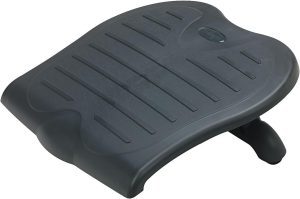
7. Kensington SoleSaver Ergonomic Footrest — Best Hard Platform
★★★★ 4.3/5.0
Price: ~$30
The SoleSaver is the only hard-platform footrest in this list — scratch-resistant plastic with a textured grip surface and precise 3-level height and tilt adjustment (10°, 20°, 30°). It suits workers who prefer firm, stable support over cushioning and works best when worn with shoes.
Best for: Users who prefer firm support over memory foam, those needing precise height and angle control.
- Precise height and angle adjustment — 3 levels each
- Firm stable platform for users who dislike foam
- Established ergonomic brand
- Hard surface uncomfortable without shoes
- Less comfortable for extended barefoot use
Quick Comparison
| Footrest | Price | Type | Best For |
|---|---|---|---|
| ComfiLife | $34.19 | Adjustable foam | Best Overall |
| Mind Reader | $29.99 | Fixed foam | Best Budget |
| StrongTek | ~$42 | Adjustable bamboo | Tall Users |
| Humanscale FR300 | Check price | Rocker | Active Sitting |
| Lorell | Check price | Rocker | Budget Rocker |
| Everlasting Comfort | $27.99 | Fixed foam | Back Pain Relief |
| Kensington SoleSaver | ~$30 | Hard platform | Firm Support |
How to Use a Footrest Correctly
A footrest only works if your overall sitting position is correct first. Follow this sequence:
- Adjust your chair so your thighs are parallel to the floor and your elbows align with your desk surface
- Place the footrest so your feet rest flat on it with your knees at approximately 90 degrees
- Set the angle between 15° and 30° — most people find 20° optimal for reducing calf pressure
- Avoid pushing the footrest too far forward — your knees should not extend past your toes
- If using a rocking footrest, let your feet move naturally — don’t lock them in place
Pair with a properly adjusted ergonomic home office setup for best results.
Who Doesn’t Need a Footrest
A footrest is not a universal fix. Skip it if:
- Your feet rest flat on the floor naturally at your current chair height
- You use a sit-stand desk and alternate positions regularly throughout the day
- You’re tall enough that raising your chair to correct elbow height still leaves your feet floor-flat
- Your lower-back pain is caused by something other than foot positioning
What to Look For When Choosing a Footrest
- Adjustability: Angle adjustment (15°–30° range) lets you fine-tune to your chair and desk height
- Height: Standard footrests are 3–4 inches high. Taller users may need 4.5–5 inches
- Surface material: Memory foam for cushioning, bamboo or hard plastic for firmer support
- Non-slip base: Essential on hardwood floors — check for rubber grips underneath
- Rocker vs fixed: Fixed for posture correction, rocker for circulation and active movement
Frequently Asked Questions
Do I need a footrest if my chair is adjustable?
Possibly. If adjusting your chair to the correct elbow height leaves your feet dangling, yes. If your feet rest flat on the floor at that height, no.
Can a footrest help with lower back pain?
Yes, if the pain is caused by pelvic tilt from unsupported feet. A 2018 ergonomics study found foot support reduced lower-back muscle activation by up to 15%. It won’t help if the cause is unrelated to sitting posture.
What height footrest do I need?
Measure the gap between the floor and your feet when sitting correctly. Standard footrests (3–4 inches) work for most people. If you’re over 6 feet tall or have a higher desk, look for 4.5–5 inches.
Is a rocking footrest better than a fixed one?
For circulation and reducing static muscle fatigue, yes. For strict posture correction, a fixed footrest with angle adjustment gives more control. Choose based on your primary goal.
How long does it take to get used to a footrest?
Most users adapt within 2–3 days. Initial stiffness in the calves is normal as your sitting posture adjusts. If discomfort persists beyond a week, check your angle and height settings.

Sophia Carter has spent years testing productivity tools and workspace setups. She helps remote workers build efficient home offices that support deep focus, ergonomics, and better workflows.